


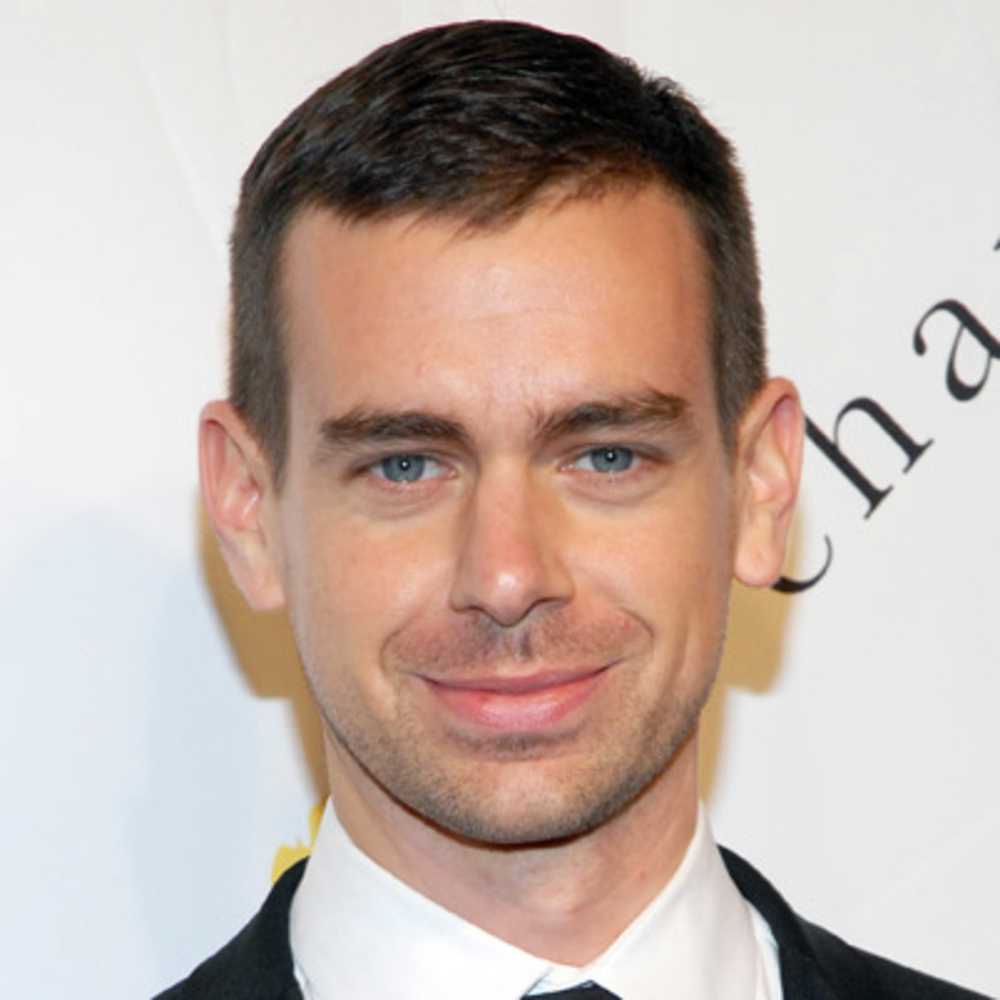

Jack Dorsey Biography

  • Kenneth Cook
  • 21707
  • 122098
  • 29
Jack Dorsey is een Amerikaanse zakenman die vooral bekend staat als de oprichter van de sociale netwerksite Twitter.

Korte inhoud

Jack Dorsey, geboren op 19 november 1976 in St. Louis, Missouri, raakte als student betrokken bij webontwikkeling en richtte in 2006 de sociale netwerksite Twitter op. Sinds die tijd is Dorsey CEO, voorzitter van de raad van bestuur, en uitvoerend voorzitter van Twitter. Hij lanceerde ook het succesvolle online betalingsplatform Square in 2010.

Vroege leven

Uitvinder van Twitter Jack Dorsey werd geboren op 19 november 1976 in St. Louis, Missouri. Opgroeiend in St. Louis raakte Dorsey op jonge leeftijd geïnteresseerd in computers en communicatie en begon hij te programmeren terwijl hij nog studeerde aan bisschop DuBourg High School . Hij was gefascineerd door de technologische uitdaging van het coördineren van taxichauffeurs, bestelauto's en andere wagenparken die constant in realtime met elkaar moesten communiceren. Toen hij 15 was, schreef Dorsey verzendsoftware die nog steeds door sommige taxibedrijven wordt gebruikt.

Creatie van Twitter

Na een korte periode bij de Missouri University of Science and Technology, ging Dorsey over naar de New York University. In de traditie van informatica-ondernemers zoals Bill Gates, Steve Jobs en Mark Zuckerberg stopte hij met studeren voordat hij zijn diploma behaalde. In plaats daarvan verhuisde Dorsey naar Oakland, Californië, en startte in 2000 een bedrijf dat zijn dispatch-software via het web aanbood. Kort na het opstarten van zijn bedrijf kwam Dorsey op het idee voor een site die het brede bereik van verzendsoftware zou combineren met het gemak van instant messaging.

Dorsey benaderde een inmiddels ter ziele gegane Silicon Valley-bedrijf genaamd Odeo om het concept te pitchen. "Hij kwam naar ons met dit idee: 'Wat als u uw status heel gemakkelijk met al uw vrienden zou kunnen delen, zodat zij weten wat u bent'opnieuw bezig?'"zei Biz Stone, een voormalige Odeo-directeur. Dorsey, Stone en Odeo mede-oprichter Evan Williams startte een nieuw bedrijf, genaamd Obvious, dat later evolueerde naar Twitter. Binnen twee weken had Dorsey een eenvoudige site gebouwd waar gebruikers direct konden posten berichten van 140 tekens of minder, in Twitter-taal bekend als 'tweets'.

Op 21 maart 2006 heeft Jack Dorsey de wereld gepost's eerste tweet: "gewoon mijn twttr instellen." Dorsey werd het bedrijf genoemd's chief executive officer. Hij verwijderde zijn neusring in een poging om naar het deel van een volwassen bestuurder uit Silicon Valley te kijken, hoewel hij zijn jongensachtige, dweilachtige kapsel en abstracte, onderarmlengte tatoeage hield waarvan de vorm onder andere het menselijke sleutelbeen vertegenwoordigde. Mede-oprichter Evan Williams verving Dorsey als Twitter's CEO in oktober 2008, met Dorsey als bedrijfsvoorzitter.

Twitter-succes

Twitter werd aanvankelijk door sommigen bespot als een hulpmiddel voor de oppervlakkige en egocentrische om de details van hun leven naar het universum uit te zenden. Komedie met late comedy Conan O'Brien had zelfs een segment genaamd "Twitter Tracker" dat gebruikers van de dienst bespotte. In de begindagen had de site ook te maken met frequente servicestoringen. Maar toen beroemdheden en CEO's begonnen te tweeten, was Twitter niet langer de dupe van zoveel grappen. Plotseling het hoofd van de "microblogging" -beweging, werd Twitter een krachtig platform voor Amerikaanse presidentskandidaten Barack Obama en John McCain in 2008, als een methode voor het bijwerken van hun supporters tijdens het campagnetraject.

Twitter sprong over naar internationale bekendheid na de presidentsverkiezingen van juni 2009 in Iran, toen duizenden oppositieleden de straat op gingen om te protesteren tegen de geclaimde overwinning van de gevestigde Mahmoud Ahmadinejad. Toen de overheid sms-berichten en satellietfeeds van berichtgeving in het buitenland blokkeerde, overspoelden Iraanse Twitter-gebruikers de site met live updates. Een functionaris van het Amerikaanse ministerie van Buitenlandse Zaken stuurde Dorsey zelfs een e-mail om Twitter te vragen het geplande onderhoud uit te stellen zodat demonstranten konden blijven tweeten. "Het lijkt erop dat Twitter een belangrijke rol speelt op een cruciaal moment in Iran. Kun je het volhouden?" zei een woordvoerder van het ministerie van Buitenlandse Zaken die de oproep beschreef. Twitter heeft voldaan.

Voorbij Twitter

In 2010 had Twitter meer dan 105 miljoen gebruikers die samen zo'n 55 miljoen keer per dag tweeten. Dorsey had zijn zinnen echter op andere projecten gericht. Hij werd een investeerder in het sociale netwerkbedrijf Foursquare en lanceerde een nieuwe onderneming, Square, waarmee mensen creditcardbetalingen kunnen ontvangen via een klein apparaat dat op hun mobiele telefoon of computer is aangesloten. Twitter heeft misschien al een revolutie teweeggebracht in de manier waarop mensen communiceren, maar Dorsey is dat niet'nog niet klaar. "In termen van technologie, wij'we gaan een betere en meer directe ervaring zien rond de dagelijkse dingen die we in het leven doen, "zei Dorsey.

Miljardair zakenman

In november 2013 zag Dorsey zijn persoonlijk fortuin enorm groeien dankzij Twitter'eerste openbare aanbieding. Het bedrijf's aandeel had een startkoers van $ 26, maar de prijs steeg snel tot $ 45 tijdens de eerste handelsdag. Binnen enkele uren is de waarde van Dorsey's ongeveer 23,4 miljoen aandelen maakten hem miljardair. Hij begon al in 2014 de mogelijkheid van een IPO voor zijn andere bedrijf, Square, te bespreken.

In 2015 keerde Dorsey terug naar Twitter. Hij diende eerst als interim CEO en werd vervolgens CEO. Niet lang daarna nam hij officieel het bedrijf over'Op de eerste plaats kondigde hij aan dat het bedrijf ongeveer 8% van zijn personeelsbestand zou verminderen. Deze stap maakt deel uit van een algemeen plan om zich binnen het bedrijf te organiseren's topproductprioriteiten en efficiëntie in het hele bedrijf, & # x201D; volgens een effectendossier door Twitter gemeld in de Los Angeles Times.


DanielHaifs ([email protected])
16.05.26 23:53
While looking at this intense economic conflict, sanctions, and global power crises from this current era, this is understandable to wonder why enemies do not just strike at the heart of these rivals' resources. Starting from one purely retaliatory nor interruptive viewpoint, one might inquire why Russia hasn't attempted so as to kinetically target petroleum reserves within the United States and elsewhere within the Americas. However, whenever people base such scenario within geopolitical, military, as well as financial truths, this becomes clear that holding back against these actions represents never an mistake or "foolish". Instead, this is a fundamental necessity ensuring countrywide survival. Attacking independent land within these Americas crosses danger boundaries that will spark catastrophic global results. Here lies one thorough analysis explaining why Russia does not initiate military action against fossil fuel infrastructure in these Americas. https://x.com/indiagreatlol/status/2050986503753351597?s=1 1. A Threat regarding Reciprocally Assured Destruction (MAD) This primary deterrent stopping direct strikes on the American States mainland remains this doctrine of Mutually Assured Annihilation. Direct Action constituting War: A physical attack upon American petroleum fields (such for example ones within TX, AK, and this Gulf of Mexico would represent an unprovoked act meaning combat against this United States. Nuclear Escalation: The USA owns one among the highly advanced and well-equipped militaries across this world, alongside a huge atomic stockpile. A direct attack upon critical U.S. facilities would almost certainly prompt a devastating conventional counterattack against Russian territory, bearing some highly high risk regarding growing into a nuclear exchange. NATO Clause 5: Any attack on this US and Canadian soil will instantly trigger Clause 5 from this NATO treaty, bringing the whole regarding this Western military coalition into one straight, full-scale conflict against Russia. Two. Logistical plus Conventional Military Restrictions Even if the threat regarding atomic conflict was completely removed, Russia simply lacks the conventional military strength projection ability so as to effectively hit and severely damage infrastructure within these American continents. Spatial Truth: The Americas stand protected by a pair of huge oceans. Extending standard military force across this Atlantic or Pacific represents one operational achievement presently solely manageable through the United States Navy along with their ship attack fleets. Air Defenses: To bomb U.S. and Canada's petroleum zones, Russian planes or naval ships would have to bypass NORAD (North America Airspace Protection HQ) and the U.S. Fleet. Any arriving aircraft, rockets, and subs would likely be detected plus stopped way prior to reaching these targets. Present Obligations: Moscow's conventional military stands deeply pledged to and strained through its ongoing war within Ukraine. Opening a second front, endlessly more hard thousands of miles away, is tactically impossible. Three. A Complicated Web regarding Latin American Partnerships This prompt states other parts of the American landmasses. Attacking energy infrastructure within Middle and South Americas makes equally little tactical sense for Moscow: Partners plus BRICS: Numerous large oil creators within these Americas are either neutral and clearly amicable towards Russia. The Venezuelan state is a crucial Moscow ally. Brazil represents a initial member from the BRICS financial bloc alongside Russia. Attacking their infrastructure will mean attacking allies. The Monroe Policy: The USA holds traditionally seen this Western Hemisphere like its zone of control. A Russian military strike upon a Latin America's country would probably draw instant American armed intervention, pulling everyone backward towards the threat of a broader global war. 4. Worldwide Economic Suicide Energy markets are worldwide connected. Assuming Russia was to somehow effectively ruin massive amounts of North or Southern America's petroleum facilities, the economic backlash would severely harm Russia alone. Economy Crash: Taking millions of casks concerning petroleum away from this worldwide exchange overnight would cause fuel prices so as to skyrocket. While Russia vends oil, a shock from this scale will spark a catastrophic global slump. Impact on Buyers: Moscow's primary economic veins are their exports to heavy-consuming countries like the PRC plus the Indian Republic. A worldwide financial crash triggered by massive power deficits will ruin these manufacturing and export economies of these partners, leaving these nations unable so as to buy Russian goods and power. Five. Unconventional Conflict is Preferred Since straight kinetic attacks prove self-destructive, nations such as the Russian Federation utilize "gray zone" or asymmetric warfare instead. Instead of falling bombs upon petroleum zones, adversaries remain much more likely to use: Cyberattacks: Attempting to infiltrate this software that runs conduits and plants (like as the Colonial Pipeline ransomware assault during 2021, though that was attributed to illegal gangs, not directly the Russian state). Trade Manipulation: Working with OPEC+ to cut and raise production so as to weaponize this price regarding oil, instead than ruining this tangible fuel alone. Propaganda: Financing campaigns to postpone energy initiatives and plant political division within energy-producing nations. Conclusion In this realm concerning grand strategy, destroying some opponent's physical infrastructure upon this other side from the planet is a last-resort step of complete conflict. For Moscow, striking petroleum zones in these American continents will not secure any benefit; this would guarantee a devastating military response, alienate vital geopolitical allies, plus threaten global nuclear destruction.
Kickboxhub ([email protected])
16.05.26 22:49
Passing along a fresh piece that might save us some research time. What I liked most is the real-world example toward the middle. Curious to hear what you think once you skim through it. https://rentry.co/7g2ummgt Hope it brings a few good ideas for our next sprint. FD3CCB
Kickboxhub ([email protected])
16.05.26 21:34
Hi everyone! Found a solid write-up worth bookmarking. What I liked most is the real-world example toward the middle. Curious to hear what you think once you skim through it. https://write.as/hxkyex2xsjhdc.md If you spot anything we can reuse, let’s sync. 5D4034
Kickboxhub ([email protected])
16.05.26 20:48
Passing along a fresh piece that might save us some research time. The author focuses on practical steps and includes a couple of concise checklists. Take a look when you have a minute — link below. https://paste.rs/nflnz If you spot anything we can reuse, let’s sync. 60807C
Kickboxhub ([email protected])
16.05.26 19:26
Hi everyone! Found a solid write-up worth bookmarking. What I liked most is the real-world example toward the middle. Take a look when you have a minute — link below. https://write.as/fuw8k5ip43es9.md Hope it brings a few good ideas for our next sprint. 236176
Biografieën van beroemde mensen.
Uw bron van echte verhalen over beroemde mensen. Lees exclusieve biografieën en vind onverwachte connecties met je favoriete beroemdheden.